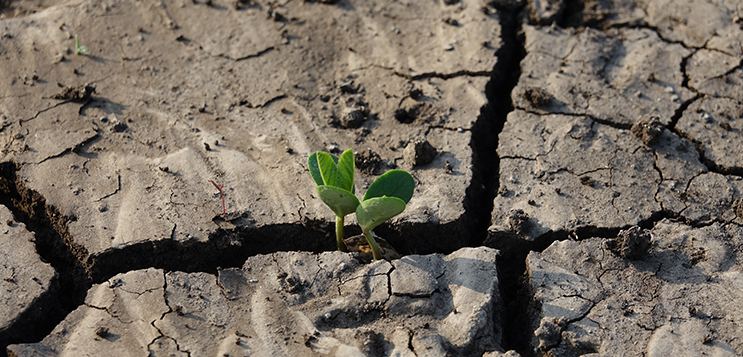
Multiple reports establish that agriculture is the biggest source of water pollution today. It is also a leading cause of deforestation, carbon emissions, and health concerns in humans.
European regulations and shifting agriculture
To accelerate the conservation of the environment and mitigate the damage caused by harmful agricultural practices across the Global South, Europe has introduced several measures over the years. Perhaps the Sustainable Development Goals agenda wasn’t working effectively on the ground. Which is why the continent—one of the largest importers of agricultural produce—realised that regulating imports could indirectly compel farmers across the Global South, since it is the largest agriculture producer, to revamp their farming methods to make them more sustainable and less damaging to the environment.
A crucial step—because, indeed, agricultural practices, owing to the overuse of chemical pesticides and fertilisers, have not only deteriorated soil health and polluted surface and groundwater but also harmed wildlife and the health of people consuming these foods. So, it is extremely necessary for agricultural systems to shift towards sustainability. Or should I say—in India’s case—shift back to a sustainable agriculture system?
While regulations like Maximum Residue Levels (MRLs), European Union’s Deforestation Regulation, and the soon-to-be-applied Green Deal are not inherently problematic—in fact, from a policy standpoint, they are essential if we want to preserve our natural resources and protect the planet—it is also important to consider the context of their implementation. That’s where the appropriateness of the now-popular term greenwashing comes into question.
The MRLs, for instance, prohibit the import of agricultural produce that contains pesticide residues above a specified limit. Several consignments of agricultural products, including India’s tea and spices have been sent back from ports because of crossing MRL limits. But is that fair?
Origin of the crisis: why greenwashing forces the South to clean it up
Back in the late 1900s, there was immense pressure on the Global South to produce larger yields. Fertiliser and pesticide companies stepped in, promising to help farmers meet this demand, and soon, the entire system became dependent on these chemical inputs.
Now, with soil degradation becoming a global issue, the world is waking up to the downside of this system. But perhaps it’s too little, too late. At the very moment we’re pushing farmers to ‘mend’ their ways, soil health has deteriorated to a near-critical point, pests have evolved resistance to existing chemicals, and climate change—with its untimely rain, heatwaves, and moisture imbalance—is disrupting farming cycles in ways that are difficult to manage without such inputs, because the demand remains high with the rising population.
This irony, however, is evident in the fact that even Europe has, at times, approved the limited use of banned pesticides on its own farms, defining greenwashing.
Who will pay the cost of transition?
The shift to sustainable farming may still be possible, but it doesn’t come without huge risks for both farmers and the economies they support. Take Sri Lanka’s attempt to transition to 100% organic farming in one go and without proper planning—it ended up becoming a key factor in the country’s economic collapse. Why? Because economies in the Global South, including India, not only rely on agriculture economically—they depend on it for survival. They simply cannot afford to lose it. And given how degraded the soil is, recovery could take four to five years. In that period, the economic losses might be too severe to even attempt a transition.
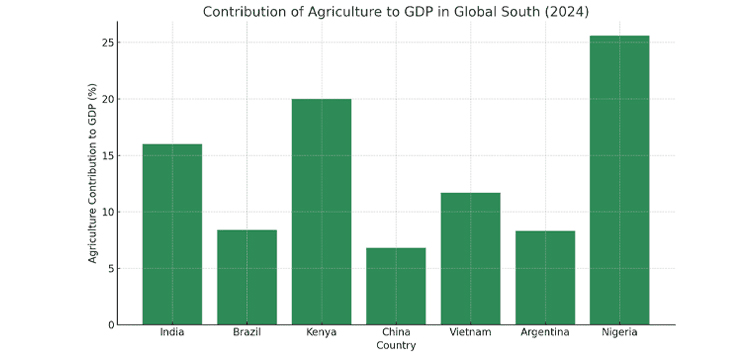
| Country | Exports (billion USD) |
|---|---|
| India | |
| Kenya | |
| Brazil | |
| Argentina | |
| Nigeria |
If these numbers tell us anything, it’s that a major chunk of these countries’ economies relies on agriculture and its exports. These figures don’t even include the agribusiness sector and its role in the broader economy. Yet, the European regulations—especially under the Green Deal—cover everything, from farming to processing, through trace-and-track mandates. Every step must now conform to sustainable methods.
What the EU must rethink
But when such regulations are drafted without considering the socio-economic realities of developing nations, they risk doing more harm than good. Reduced access to foreign markets leads to lower sales prices for farmers who are already earning marginally. That’s where the line between necessary environmental reform and greenwashing begins to blur.
Isn’t it ironic that the current flagbearer of organic farming and sustainability—Europe—is now turning to Sir Albert Howard’s An Agricultural Testament for guidance, a book he wrote after observing Indian farming methods? His book, which favoured the Indian agriculture system over Europe’s propagation of modern methods and tools was considered heretical then, and hence mostly ignored. But the same is now being used to teach the principles of sustainable farming. So naturally, many in the Global South are now questioning: is this a form of green colonisation?
Whether you call it green colonisation or greenwashing, the EU is not wrong in pointing out the need for global agricultural reform. But the cost of this reform, especially for farmers in developing countries, is extremely high. Developed nations demanding this shift must collaborate meaningfully to ensure that the burden of meeting these new standards doesn’t fall entirely on those least equipped to bear it.
Frequently asked questions
Which European regulations does the article discuss?
The article discusses Maximum Residue Levels (MRLs), the European Union’s Deforestation Regulation and the Green Deal. MRLs prohibit the import of agricultural produce containing pesticide residues above a specified limit, and consignments including India’s tea and spices have been sent back from ports for crossing these limits. The Green Deal’s trace-and-track mandates cover everything from farming to processing.
Why does the author question whether these rules amount to greenwashing?
The author considers the regulations essential in principle but questions the context of their implementation. Farmers in the Global South were pushed to raise yields in the late 1900s and became dependent on chemical inputs, and Europe itself has at times approved limited use of banned pesticides on its own farms. When rules ignore the socio-economic realities of developing nations, reduced market access lowers prices for farmers who already earn marginally.
Why is a rapid shift to sustainable farming risky for countries like India?
Economies in the Global South, including India, depend on agriculture for survival, not only for income. The author notes that degraded soil could take four to five years to recover, and that the economic losses in that period might be too severe. Sri Lanka’s unplanned attempt to move to 100% organic farming in one go became a key factor in its economic collapse.